Transportation
Neighbourhood design has a large impact on our carbon footprint because where we live affects our housing choices and how we get around. The Smart Growth Neighbourhood Incentive supports limited increased residential density in specific Neighbourhood Nodes.
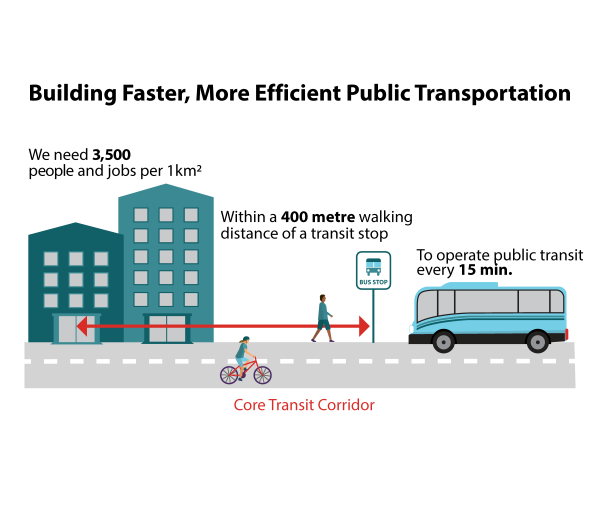
Together, the Core Transit Network and Neighbourhood Node Incentive System, incentivize developers to add more density in exchange for contributing to an amenity fund. Incentives apply to lots within 400 m walking distances of bus stops along the Core Transit Network include Dentville, Northyards, Mamquam and Garibaldi Highlands. An additional category is available for lots in Brackendale and Valleycliffe.
Walking, rolling, cycling are zero-emission ways to get around that have the added benefit of improving health and wellbeing. Guided by the Transportation Master Plan, the District of Squamish is expanding bike lanes, trail networks, and walkways to make it safer and easier to travel around town without a car.
Public transit is a great, low-cost, all-season way for people to get around. Squamish is continuing to expand the local transit system in partnership with BC Transit and working with neighbouring communities and the Province to create transit connections to Whistler, Vancouver, and beyond. In partnership with neighbouring communities and First Nations, the District continues to advocate for regional transit throughout the Sea-to-Sky Corridor.
Squamish supports the shift to EVs and had one of Canada’s fastest-growing adoption rates in 2022. The District continues to expand public EV charging stations and works with CleanBC and BC Hydro to support available rebates and incentives. Learn more about the benefits of EVs, rebates and frequently asked questions.
Reducing the number of gas vehicles on the road is also possible through carpooling and ridesharing. Born in Squamish, the Poparide mobile app is a popular tool for finding rides. MODO carsharing service and has several convenient car locations throughout town.
Learn more about carsharing and ridesharing.
Launched in 2025, the Evolve e-bike sharing program offers 75 bikes distributed across 17 locations throughout Squamish, making short trips easier without a car.

Learn About Electric Vehicles

Charging in Apartments and Condos

What Is Active Transportation?

People Powered Transportation

Transportation Master Plan

Shared Mobility