The Sḵwx̱wú7mesh People have been here from time immemorial - on this land that lives within you - thousands of years before maps, borders or towns.
We realize the harms inflicted on generations of the Sḵwx̱wú7mesh People by people, systems and policies, and we recognize that we are among the people who benefitted from those systems and policies.
We understand colonial settlement disrupted the Sḵwx̱wú7mesh People’s sacred relationship with these lands, and denied the Sḵwx̱wú7mesh people access to these places.
We know that colonization negatively impacted the economic development of the Sḵwx̱wú7mesh People. We understand that colonization undermined Sḵwx̱wú7mesh People’s feelings of truth, security, purpose and belonging.
When we speak about colonization, truth and reconciliation, and healing, we are speaking about people and their lived experiences.
Words alone are not enough to effect lasting change – it is one important part of making amends.
We are here to stand up and correct our path.
This work serves as recognition and affirmation of Sḵwx̱wú7mesh People’s experiences, including actions where harm was caused by the District.
Our municipal government exists because of the colonization and attempted assimilation of Sḵwx̱wú7mesh People – impacts that continue to be felt today.
The District of Squamish, together with the Squamish Nation, has been documenting the historical relationship between the two governments, and the truths that have been revealed are clear.
Over time, District of Squamish actions have negatively impacted the Sḵwx̱wú7mesh People: their well-being, culture, economy, governance and full enjoyment of Squamish rights and title.
The District of Squamish recognizes the racism and discrimination experienced by Sḵwx̱wú7mesh People, the loss of Sḵwx̱wú7mesh language and culture, and the lack of respect shown for the sacredness of the lands and waters.
We admit this hurt. We are here to show respect, build trust and support the well-being of the Sḵwx̱wú7mesh People.
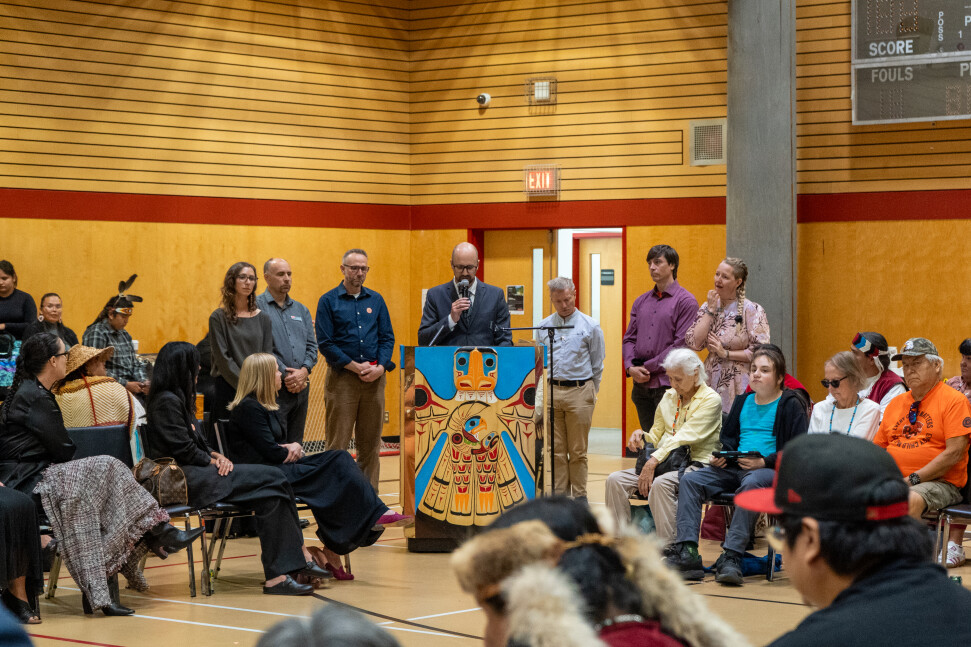
To all Sḵwx̱wú7mesh People: we are sorry. We are sorry for the harms that you, your families, your communities and your ancestors have experienced, and you continue to experience.
This is the legacy we face. We vow to learn from these past harms and to walk alongside you in a better relationship, understanding that each acknowledgement of harm requires that we learn how to move forward in a good way with you.
We will continue to deepen our understanding of your history and commit ourselves to building a better future together.
We commit to strengthening the relationship with you and continuing on this shared path of reconciliation.
We will work with you to restore your cultural connection to public lands, and honour and uphold your principles, teachings, and stories.
We offer you this apology with good intentions – for a strong future and shared path forward, together.