WASTE FAQ
On this page:
Residential Waste
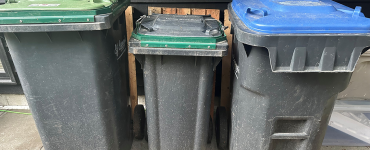
Garbage, Recycling and Organics Totes
| Garbage Tote Size | Tote Volume | Tote Capacity |
| Small | 132 litres/35 gallons | 1 to 2 standard sized garbage bags (75L) |
| Medium (same size as recycling tote) |
246 litres/65 gallons | 2 to 3 standard sized garbage bags (75L) |
| Large (No new large garbage totes will be distributed. If you select large, you will receive one small tote and one medium tote.) |
356 litres/95 gallons | 4 to 5 standard sized garbage bags (75L) |
Garbage tote sizes are changed once a year. The exchange of your garbage tote will occur in March of the following year and your solid waste utility fees will be updated for that calendar year. You can request a larger or smaller tote by completing the tote exchange online form or in person at Municipal Hall. If you are a new homeowner, please see the next question.
If your tote was damaged by wildlife please contact GFL Environmental for a free repair or replacement at [email protected] or 604-892-5604.
If you have recently moved and the existing garbage tote is too large or too small, the District can provide you with a mid-year size increase.
- Municipal Hall to arrange for this size increase as well as to pay the resulting difference in your solid waste utility fees.
- Bring a copy of your BC Land Title.
There is a fee for each change to your curbside collection services, this includes changing the size of your garbage tote, upsizing your recycling tote and ordering a second organics tote. The annual Solid Waste Utility fees vary based on which garbage tote size you choose.
No, it is not possible for individual residences to opt out of any portion of the District's solid waste services. The solid waste fees reflect the cost of all solid waste services provided by the District including collection and processing of materials, staff time, and communications; there is no opportunity to break down the fees into their component parts.
Whole townhouse complexes do have the option of receiving service directly from a commercial provider. Please contact the District if you would like to receive more information about this option.
The Solid Waste Utility fee covers all of the costs related to the curbside service of recycling, garbage and organics, including collection, transportation, processing and communications. It also includes potential fines the District may face for contamination to the recycling stream.
The fees for the garbage tote sizes reflect the impact that more garbage has on our, almost-full, landfill.
Residents will see a change in their annual Solid Waste Utility fee if they choose to change the size of their garbage tote.
Home owners with secondary suites can choose to cancel their garbage service for the secondary suite only. The tenants in secondary suites would then use the main (single family home) garbage/recycling/organics totes.
Solid waste utility bills are determined by the size of garbage tote you have at your household. If you increase the size of your garbage tote, you will have a higher solid waste utility bill. If you decrease the size of your garbage tote, your solid waste utility bill will also decrease. If you order a second organics tote, you will pay an additional fee for it on your utility bill.
If You Have Extra Recycling
If your recycling occasionally exceeds the capacity of your tote, you can:
- Take excess recycling to the DOX Recycling Depot.
- Increase the size of your recycling tote.
- There is no increase to your annual Solid Waste Utility fee, but a tote exchange fee applies.
If You Have Extra Organics or Yard Waste
If your organics or yard waste exceeds the capacity of your tote, you can:
- Order a second organics tote.
- Store the material until it can be placed in a future collection.
- Use a backyard composter.
- Leave grass clippings on your lawn.
- Take organics or yard waste to the Squamish Landfill (fees apply).
- Ask a neighbour if they have available space in their organics tote.
Due to the District’s current residential contract with GFL Environmental and for inventory reasons, residents can only exchange their current recycling and garbage tote, annually through the District of Squamish’s tote exchange process. This also applies to ordering a second organics tote.
Yes. You may choose not to use your organics tote.
Residents must still separate organic material from garbage and manage it through appropriate means, such as home composting or disposal at the Landfill Recycle Depot.
Your Solid Waste Utility fee remains the same whether or not you use the organics tote.
Please call 604-892-5604 or email [email protected] to report it.
Visit these frequently asked questions or you can email [email protected] directly.
Waste Sorting Help
Recycling and disposal options can change over time, so it's important to use current waste-sorting information. The following resources can help:
- What Goes Where Guide: A quick reference guide to help residents sort garbage, recycling, and organics. Download a copy and keep it near your bins.
- Waste Wizard: Search for an item to find out whether it belongs in garbage, recycling, organics, or another disposal program. The Waste Wizard is updated regularly to reflect current disposal and recycling options. Access it online or through the free Squamish Curbside Collection app for iPhone.
- Still not sure? Call the Squamish Landfill at 604-898-5635.
Need help remembering your collection day?
Enter your address in the curbside collection calendar, and sign up for weekly reminders via email, app or phone. You can also print your own calendar, or sync your collection schedule with your personal electronic calendar.
Recycling
Soft plastics, plastic bags, and plastic film should not be placed in recycling totes because they can tangle sorting equipment and interfere with the recycling process.
To find recycling options, search "plastic bags" or "overwrap" in the Waste Wizard or take them to the Squamish DOX Recycling Depot.
Plastic bags and overwrap are not accepted in curbside recycling totes but can be recycled at participating depot locations in Squamish.
What goes in the garbage?
- Plastic bags labelled biodegradable or compostable
- Lumber and construction wrap
- Garbage bags (any colour)
What can be recycled at a depot?
- Grocery, bread, newspaper, flyer, and dry-cleaning bags
- Produce, salad, bulk food, and frozen vegetable bags
- Overwrap from mattresses, furniture, and household electronics
- Outer bags from diapers, feminine hygiene products, paper towels, and tissues
- Bags from water softener salt, wood pellets, and household garden products
Glass is not accepted in curbside recycling because it can break during collection, creating a safety hazard for collection staff and contaminating other recyclable materials.
Please take glass containers to a recycling depot for proper recycling and disposal.
The District has explored residential glass collection in the past; however, it was not considered cost-effective at the time. Staff continue to evaluate future options.
Glass collected at Squamish DOX and the Squamish Landfill is reused as road aggregate at the landfill, where it serves as a durable road base material. Please rinse glass containers before recycling them to reduce odours and help prevent wildlife attraction.
The District of Squamish curbside recycling collection is managed by Recycle BC, which is a program overseen by the Ministry of Environment and Parks. BC is a leader in residential recycling because the Recycle BC program uses rigorous audits and pre-approved end markets.
Learn more about what happens to your recycling on the Recycle BC website.
Most items accepted at recycling depots, including electronics, batteries, light bulbs, smoke alarms, small appliances, and beverage containers, are managed through Extended Producer Responsibility (EPR) programs.
Under these programs, producers are responsible for collecting and recycling their products at end of life. By taking items to a recycling depot, you help ensure they are managed through approved recycling systems rather than disposed of as waste.
Learn more about EPR recycling programs in British Columbia.
Empty and rinse containers before placing them in your recycling tote. Food residue can contaminate recyclable materials, making them more difficult to sort and recycle. Rinsing containers also reduces odours that can attract wildlife, particularly bears.
If a recycling load contains too much contamination, some materials may not be recyclable and could be sent to the landfill instead.
Organics
Food scraps, yard waste, and other accepted organic materials collected in Squamish are sent for composting, where they are processed into nutrient-rich compost. During the composting process, naturally occurring microorganisms break down organic material using oxygen, moisture, and heat.
Composting helps keep organic material out of the landfill and can significantly reduce the amount of garbage generated by households.
Watch this short video to learn more about how commercial and residential organic material from Squamish is composted.
Secure Your Containers
- Keep organics totes locked at all times except on collection day.
- Ensure garbage room doors and bin lids are closed and secured.
- Consider installing a door seal to prevent rodents from entering waste storage areas.
- Store kitchen catchers and organics totes in a cool location whenever possible.
Reduce Odours
- Wrap food scraps in newspaper or paper bags.
- Keep meat, fish, and bones in the fridge or freezer until collection day when possible.
- Cover food scraps with newspaper, leaves, or yard waste in your organics tote.
- Allow grass clippings and leaves to dry before placing them in the tote.
Keep Containers Clean
- Rinse your kitchen catcher and organics tote regularly.
- Use a mild detergent or vinegar solution to help control odours.
- Keep lids closed to reduce flies and help prevent maggots.
Need a Tote Repair?
Contact GFL at 604-892-5604 or [email protected] for tote repairs.
Maggots come from fly eggs and are most commonly found in food waste, particularly meat scraps. The best way to prevent maggots is to keep flies from accessing your organics.
Preventing Maggots
- Store meat scraps in the freezer until collection day.
- Wrap meat scraps and plate scrapings in newspaper before placing them in the organics tote.
- Cover food scraps with yard waste, leaves, or newspaper.
- Keep your kitchen catcher and organics tote closed and locked.
- Store your tote in a shaded area whenever possible.
- Clean your kitchen catcher and organics tote regularly with a mild detergent or vinegar solution.
- Consider adding weather stripping around the tote lid to improve the seal.
Getting Rid of Maggots
- Apply salt, vinegar, or lime directly to maggots.
- After collection day, pour boiling water into the empty tote.
- Clean the tote thoroughly, paying particular attention to the lid and upper edges where flies may lay eggs.
Important
- Do not apply chemicals to organics totes containing material awaiting collection.
- If your tote lock or lid is damaged, contact GFL to arrange a repair.
No. Plastic bags of any kind, including biodegradable and compostable bags, are not accepted in organics totes.
To collect food scraps, use paper bags, newspaper, or paper kitchen catcher liners.
Composting facilities have difficulty distinguishing compostable plastic bags from conventional plastic bags. Allowing them can increase contamination and reduce the quality of the finished compost.
Organics are collected before recycling and garbage to reduce the amount of time food waste is left at the curb. This helps prevent bears and other wildlife from accessing organics totes and reduces human-wildlife conflicts.
During both weekly and every-other-week organics collection periods, organics are typically serviced before recycling or garbage on collection day.
Landfill
No. The District of Squamish is not accepting new landfill charge accounts. All transactions must be paid at the time of disposal.
No. The District of Squamish does not accept pre-payments. All landfill transactions must be paid at the time of disposal by cash, debit, or credit card.
No. Soil sales at the site behind the landfill are operated by GFL, not the District of Squamish.
For information on soil products and availability, call 604-892-5604.
No. Drywall does not need to be bagged. However, drywall must either:
- Have a visible date stamp showing it was manufactured after 1990, or
- Be accompanied by documentation confirming it does not contain asbestos.
Drywall containing asbestos is not accepted.
Multi-Family-Homes
Waste collection services in multi-family buildings are managed by the property owner, property manager, or strata council. If you would like additional recycling or organics collection options, contact your property manager or strata council.
Under the District's Solid Waste Utility Bylaw, multi-family waste rooms are required to provide separate containers for garbage, recycling, and organics.
First, contact your property manager or strata council to report the issue. If the problem is not resolved, contact the District at [email protected] for assistance.
Business Waste
New food service businesses in Squamish are required to complete a Waste Diversion Management Plan as part of the business licensing process. Once you submit your business licence application, the District will provide the required form and instructions.
A Waste Diversion Management Plan outlines how your business will separate and manage garbage, recycling, organics, and other waste streams to support waste reduction and diversion from landfill.
Under the District’s Solid Waste Utility Bylaw, businesses are required to:
- Separate recyclables from waste (e.g. organics, cardboard, soft plastics, etc.).
- Reduce recycling and organics contamination (putting in things that don’t belong) by sorting material properly.
- Collect landfill waste in clear plastic bags.
- Ensure all employees and contractors understand how to properly separate and dispose of garbage, organics and recycling.
- Ensure all employees and contractors understand the District’s Wildlife Attractant Bylaw and how to minimize wildlife attractants.
- Post clear and adequate signage with information on separating garbage, organics and recycling on the premises and in the disposal area, as well as information pursuant to the District’s Wildlife Attractant Bylaw.
Start by discussing the issue with your employer or supervisor. Businesses in Squamish are required to separate recyclable and organic materials from landfill waste under the District's Solid Waste Utility Bylaw.
If space limitations or building infrastructure are preventing recycling or organics collection, your employer may need to work with the property manager to identify suitable collection options.
If your concerns are not addressed, please contact [email protected] for assistance.
A circular economy focuses on reducing waste by keeping products, materials, and resources in use for as long as possible through reuse, repair, sharing, and recycling.
For businesses, circular practices can help reduce disposal costs, lower material costs, improve resource efficiency, and create new opportunities to recover value from products and materials that might otherwise be discarded.
Learn more about how the Circular Economy contributes to Squamish's economic development.
Businesses in Squamish are required to separate recyclable and organic materials from landfill waste under the District's Solid Waste Utility Bylaw.
Proper waste separation helps reduce disposal costs, conserve landfill capacity, and ensure recyclable and compostable materials are managed appropriately. Businesses that do not comply with bylaw requirements may be subject to follow-up from the District.
It is important to ensure garbage and organics are not accessible to wildlife. If bins cannot be stored indoors or in a secure enclosure, ask your waste hauler to provide lockable, wildlife-resistant containers and ensure lids remain closed and secured at all times.
Keeping food scraps and organic waste out of garbage bins can also help reduce odours that attract bears. Use the organics collection program whenever possible and ensure organics containers are properly locked.
If a wildlife-resistant bin is damaged or not functioning properly, contact your waste hauler for repairs or replacement.
Single-use plastic checkout bags have been prohibited in British Columbia since 2023 under the Single-Use and Plastic Waste Prevention Regulation. To comply with provincial requirements, businesses may offer reusable bags or recycled paper bags to customers for a fee.
Single-use plastic straws are generally prohibited in British Columbia. However, businesses must make flexible plastic straws available to customers who require them for accessibility reasons.
Other single-use food service accessories, such as cutlery, condiment packages, drink cup lids and sleeves, napkins, and straws, should generally only be provided upon a customer's request.
The facility that processes organics from Squamish's residential curbside collection cannot effectively break down compostable or biodegradable plastics. For this reason, residents should never place compostable or biodegradable plastic bags or packaging in their organics tote.
Businesses arrange waste collection through their own service providers. Depending on the processing facility and collection program being used, some commercial organics programs may accept compostable products and others may not. Businesses should follow the guidance provided by their waste hauler.
When selecting packaging, choose materials that are widely accepted through existing recycling programs whenever possible. Products that are accepted by Recycle BC are generally easier for customers to recycle and can help reduce contamination.
Before purchasing packaging in large quantities, confirm that the material is accepted through local recycling programs and avoid products labelled compostable or biodegradable unless you have verified they are accepted by your intended collection program.
Visit Recycle BC to learn more about accepted packaging materials and recycling requirements.
Businesses are still required to separate recyclable and organic materials from landfill waste, even when space is limited.
If space is a challenge, consider:
- Working with your waste hauler to explore smaller containers or more frequent collection.
- Using commingled recycling services where available.
- Reducing waste through procurement choices and minimizing unnecessary packaging.
- Taking smaller volumes of recyclable materials to local drop-off depots.
- Working with your landlord or property manager to improve waste storage and collection arrangements.
The District recognizes that every business is different. If you are experiencing challenges meeting waste diversion requirements, contact [email protected] for guidance.
The District of Squamish adopted the updated Single-Use Items Reduction Bylaw on Tuesday, February 15, 2022. The Bylaw regulates the distribution of single-use items in Squamish, including checkout bags, straws, polystyrene foam takeout containers and plastic utensils. The bylaw was later aligned with the Provincial Single-Use and Plastic Waste Prevention Regulation.
Quick Access Links
Curbside Collection
Find information about curbside garbage, recycling, and organics collection.

What Goes Where Guide & Waste Wizard
Search for an item and find out how it can be disposed of, recycled, composted or donated.
Multi-Family Homes
Find recycling resources for multi-family homes, including townhouses, apartments, and condominiums.
Community Events
Join one of the District of Squamish's free community clean-up, repair, swap, and reuse events.

Residential Waste FAQ
Get answers to all the frequently asked questions about waste and recycling.